Tashkent
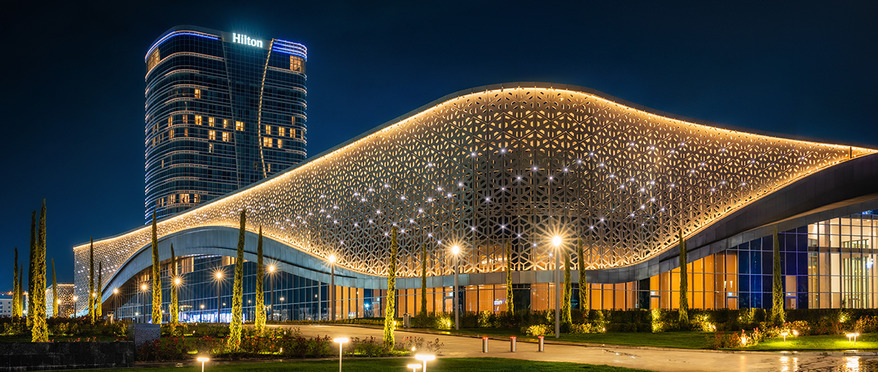
The population of Tashkent, the capital of Uzbekistan, is over 4 million. The city has broad avenues, parks, squares, gardens, and fountains.
This magnificent city epitomizes the contemporary elegance of many other global capitals, but Tashkent has its own distinct flavor. It artfully blends European architecture from the Turkestan Governorship with medieval structures that appear to be lifted straight out of the pages of ancient oriental tales, as well as gleaming glass-and-concrete high-rise commercial structures that herald a new era of independent Uzbekistan.
History of Tashkent
On the Great Silk Road, Tashkent ranks among the oldest cities. Written sources from the second century BC contain the earliest mentions of Tashkent as a city settlement:
- The city is referred to as Yueni or Shi in Chinese historical records.
- It is written Chach in the records of the Persian king Shampur, and Shash in other Arabic sources.
- Turkish writings from the ninth to the twelfth centuries contain the first mention of Tashkent.
Tashkent has long been considered one of the major Silk Road cities thanks to its favorable geographic location and temperate climate. It belonged to the Timurid Empire in the 14th and 15th centuries, and the Sheibanid dynasty ruled it in the 16th century. Tashkent was proclaimed the capital of Uzbekistan in 1930.
Where should I go in Tashkent?
The Old City of Tashkent is one of the few areas that has managed to hold onto its traditional culture. It is home to many of the city's tourist attractions and landmarks. The bustling Chorsu Bazaar, the welcoming mahallas’ courtyards, and the blue domes of the Khast Imam complex are where the spirit of old Tashkent still remains. There are bakeries, tea rooms, and artisans in this area of the city.
Other noteworthy Tashkent attractions include the Tashkent TV Tower, the German Church, the Polish Church, Amir Temur square with the famed Tashkent astronomical clock and Independence square.
The first metro (subway) system in Central Asia was built in Tashkent. The Tashkent metro is not only a quick, comfortable and cheap mode of transportation throughout the city, but it is also a piece of architectural history. Each of the 43 stations is uniquely designed.
One of the Muslim saints, Sheikh Ai-Khoja, and his wife, Ambar Bibi, are buried at the Zangiata Mausoleum, which is 15 kilometers from Tashkent. The majority of Tashkent residents and tourists go frequently to this religious place.
Museums
Tashkent is also the hub of our culture. It has a wide variety of exhibits and boasts numerous intriguing museums and galleries.
From the early Paleolithic era to the present, Uzbekistan's history is covered by the State Museum of History. Uzbek carpets, ceramics, textiles, and other handicrafts are on display in the Museum of Applied Art. Interesting collections are also available at the Tashkent Museum of Railway Equipment, the Amir Timur Museum and the State Museum of Art. Visitors will find exhibits on the history of the automobile at the Polytechnic Museum. The home-museums of Sergei Yesenin and Anna Akhmatova will like to readers who enjoy literature.
Parks
The parks in Tashkent are fantastic for walking and are especially lovely in the spring and fall.
The layout and architecture of Tashkent's first park to incorporate "green" building practices is Ecopark. There aren't any fairground rides, but visitors can have a picnic on the grass, or practice yoga while escaping the city's bustle.
The Central Park (previously Telman Park) offers shady lanes and contemporary European attractions for kids and adults, including the first genuine French carousel in Uzbekistan. The tallest Ferris wheel in Uzbekistan, which provides a breathtaking view of the city, is located at Ankhor Lokomotiv Park.
Shopping
Visit the Samarkand Darvaza, Mega Planet, Next, Parus, and Compass centers to combine shopping and entertainment. These provide up-to-date amenities like food courts, movie theaters, kids' play areas, and a large number of shops carrying top international brands.
Tashkent's bazaars are where you can experience the charm of shopping oriental style, complete with merchants and stores stocked with seasonal goods, spices, hot bread, and a wide variety of products. Tourists most frequently visit the Chorsu and Alay Bazaars.
About Food
Numerous cafes and restaurants in Tashkent serve a variety of cuisines, including European, Russian, Asian (including Korean, Chinese, and Indian), Middle Eastern, Caucasian, and Uzbek as well.
Uzbek cuisine
Nearly every street is lined with teahouses and cafes (known as "Milliy Taomlar," which translates to "national dishes") that serve age-old fare like shashlik, shawarma, samsa, plov, naryn, manti, lagman, and shurpa. These restaurants provide tasty food of the highest caliber at affordable prices.
There are numerous food rows at the Chorsu Bazaar that offer all the well-known Uzbek dishes at incredibly low prices, making it another culinary highlight in Tashkent.
The Central Asian Plov Centre (Osh Markazi) serves the best “plov” in Tashkent. In just a few hours, the enormous cauldrons that are filled with food from all over the city become empty.
Coming to Tashkent
The most practical method of travel from other countries to Tashkent is by air. Numerous foreign airlines, including Aeroflot, Air Astana, Asiana Airlines, China Southern Airlines, Korean Airlines, Nordwind Airlines, Somon Air and Turkish Airlines, offer flights directly to the city. Uzbekistan Airways, the country's flag carrier, operates regular flights to numerous cities in Europe, Asia, and North America, including Te Aviv, Frankfurt, Istanbul, Kuala Lumpur, Bangkok, Beijing, Delhi, Frankfurt, New York, Paris and Seoul. Along with domestic flights, it also flies to many CIS nations.
Trains are the primary mode of transportation within Uzbekistan, running frequently between Tashkent and Samarkand, Bukhara, Urgench, Nukus, and other main cities.
Communicating in Tashkent
The official language of Uzbekistan is Uzbek, though Tashkent also uses Russian for international communications. The majority of the signs, menus, and tourist information in Tashkent are in Russian.
Even though more people are learning English, it is still not as common as Russian. In Tashkent, the majority of hotels, eateries, and other tourist destinations have staff members who can converse in English.
Safety
Tashkent is a friendly, and secure city that is great for solo travelers as well as family or group vacations. There are a lot of law enforcement officers in crowded public places like metro stations, parks, malls, and bazaars. Be ready to be stopped by police on the street and asked for your passport and registration documents.

Comfort Travel is your best choice for unforgettable adventures. We create individual and group tours, ensuring reliability and quality of service. Open up new horizons with us!
@2025 - Altaratour Права защищены.
Rates are provided by the Central Bank of Uzbekistan and refresh daily.